
Why We Give Beaconsfield Children Real Tools — And What It Teaches Them
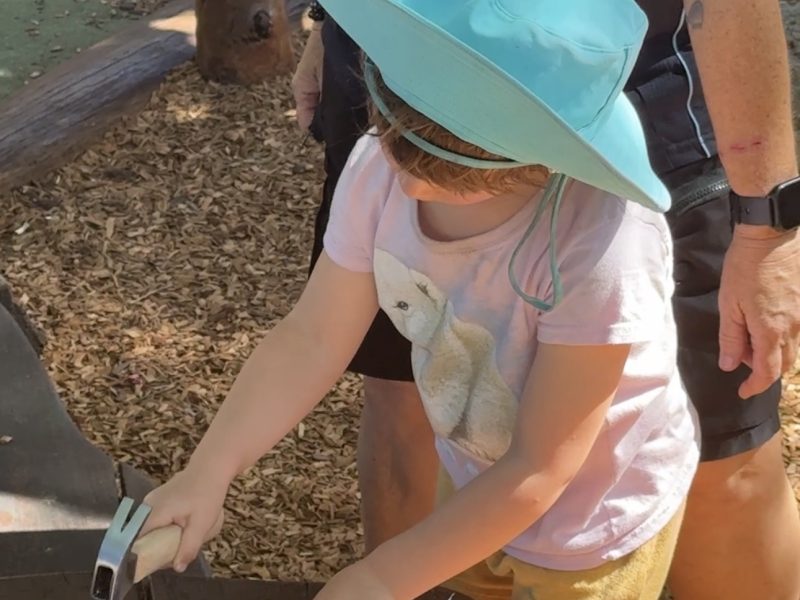
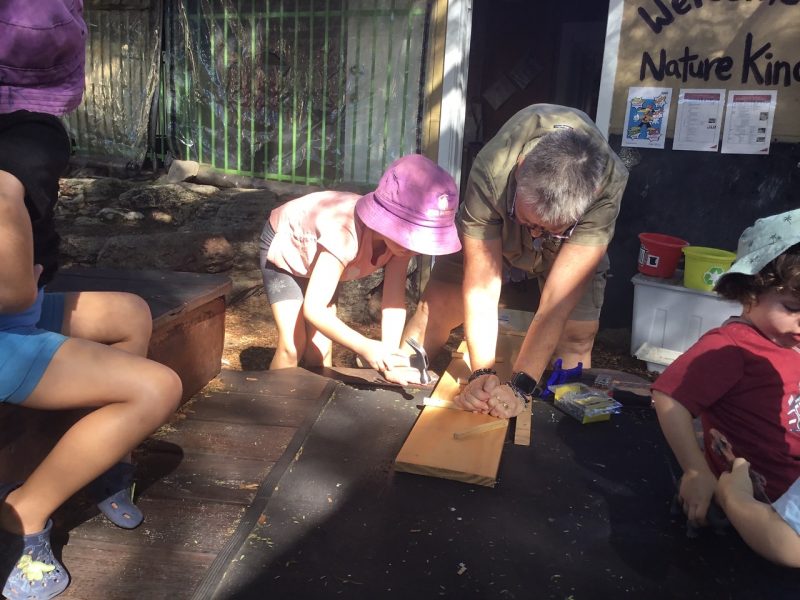
At Little Learners, our Nature Kindergarten children use real hammers, saws, drills, whittling knives and flint sticks. Under close supervision, in a purposeful environment, with the full support of their educators. This is not recklessness — it is one of the most carefully considered and developmentally powerful things we do. Here is why.


The Question Every Beaconsfield Parent Asks
When parents hear that their four-year-old will be using a hammer, a handsaw, a drill, or striking a flint to make sparks, the first response is almost always the same: a pause. A raised eyebrow. Sometimes the question is said out loud. Real tools? With children that age?
It is a completely reasonable reaction. We live in an era that has become progressively more cautious about what children are allowed to do — an era that has, in many ways, padded, softened and risk-proofed childhood to the point where many children arrive at school never having used anything sharper than a plastic butter knife or climbed anything higher than a playground that meets every safety standard in the book.
We believe something important has been lost in that process. And we believe the evidence — from the children we see at Little Learners every day, and from decades of early childhood research — supports us.
This post is for Beaconsfield families who are curious about what our bush skills and real tools program actually involves, why we run it, and what it builds in the children who experience it. We want to answer the question honestly — not with reassurances, but with reasons.
What the Bush Skills Program Actually Involves
Our Nature Kindergarten children — aged 3 to 6 — participate in a quarterly Nature Program alongside weekly enrichment activities that together form our bush skills curriculum. These are not improvised or casual. They are carefully planned, intentionally sequenced, and led by educators who are trained specifically for these experiences.
The activities include:
🔨 Hammers, Saws & Drills
Children work with real hand tools — hammers, handsaws and hand drills — to shape, join and create with wood. Each session begins with explicit instruction on how to hold, use and respect each tool safely. Educators maintain close supervision throughout, with one educator focused on tool use at all times.
🪵 Whittling & Wood Carving
Using appropriate child-safe whittling tools, children carve and shape green wood — creating whistles, small sculptures, and functional objects. This is one of the oldest practical crafts in human history, and it builds fine motor control, patience and creative problem-solving in ways that few other activities match.
🔥 Fire Lighting with Flint
Under close educator supervision, children learn to use flint sticks to create sparks — understanding the principles of fire, the conditions needed to sustain it, and the deep respect that it demands. Our outdoor fire pit provides a controlled, purposeful setting for these experiences throughout the year.
🧺 Basket Weaving & Crafting
Using natural materials gathered from our outdoor environment, children weave, bind, and construct — learning patience, pattern recognition, and the satisfaction of creating something functional and beautiful with their hands from raw materials.
🌿 Whistle Making & Herbal Teas
Children carve simple whistles from green branches and create herbal teas from plants grown in the centre’s gardens. These activities connect children to the idea that nature is not just a backdrop — it is a resource, a pharmacy, and a craft studio, when you know how to look at it.
🪨 Creek Bed & Bush Navigation
Learning to cross our creek bed, climb trees, read terrain, balance on logs, and navigate uneven ground — the practical physical skills of bush life that develop proprioception, spatial awareness, risk literacy and the physical confidence that makes everything else easier.
These activities are woven through our quarterly Nature Program and our ongoing enrichment program, which is included for all Nature Kindergarten children at no additional cost as part of our enrichment program.
Why Real Tools — Not Toy Ones
This is perhaps the question that matters most. Why not use plastic tools, or foam tools, or safely rounded approximations of the real thing?
The answer is that fake tools teach children a false lesson about the world: that the objects around them are fundamentally safe to use carelessly, that mistakes don’t have consequences, and that the skills required to use them don’t need to be learned. A child who has only ever used a toy hammer has learned nothing about a real one — except, perhaps, a misplaced confidence.
Real tools teach real things. They require real attention, real care, and real technique. They have edges and weights that demand respect. And when a child uses a real hammer for the first time and drives a nail cleanly into a piece of wood — when they feel the resistance give and see what they have made — the satisfaction is completely genuine. It cannot be manufactured with a plastic substitute.
“Practical life skills are woven into every adventure — whether it’s learning to cross a creek bed, balance on logs, use hand tools, or care for the garden.”— Little Learners Nature Kindergarten program description
This philosophy is not new. It is the foundation of the Scandinavian forest school tradition that inspires our Nature Kindergarten — a tradition in which children across Sweden, Norway, Denmark and Finland have been using real tools, building fires and navigating nature independently for decades, with outcomes that consistently show stronger school readiness, greater emotional resilience, and more capable, confident young people than comparable programs that prioritised safety over authentic experience.
What These Experiences Actually Build
Every bush skill we teach has a developmental purpose. None of this is incidental. Here is what each category of experience builds in children aged 3 to 6:
Fine motor skills and hand strength
Hammering, whittling, drilling and weaving all demand precise, controlled use of the hands and fingers in ways that few early childhood activities match. The fine motor skills developed through tool use translate directly into handwriting readiness, scissor control, self-dressing, and the general manual dexterity that school demands from day one. Children who have spent years doing meaningful, resistance-based work with their hands arrive at school with a significant physical advantage.
Risk literacy and executive function
Using a real tool requires children to assess risk, regulate their own impulses, attend carefully, follow multi-step instructions, and maintain focus through a task that demands it. These are precisely the executive function skills — working memory, impulse control, cognitive flexibility — that early childhood researchers identify as the strongest predictors of academic success, far outperforming any early academic measure.
A child who has learned to use a saw safely — who understands why the blade cuts what it cuts, who has developed the habit of checking where their fingers are before applying pressure — has developed a quality of attention and self-regulation that carries into every other learning context they will ever encounter.
Genuine confidence — not performed confidence
There is a kind of confidence that comes from being praised, and a kind that comes from having actually done something difficult.
These are not the same thing, and children know the difference. When a child at Little Learners makes fire with flint for the first time — when they see the spark catch and understand that they caused it — the look on their face is not one of approval-seeking. It is something quieter and more substantial. It is the look of a person who has just discovered something about their own capability.
This is what we are building. Not confidence as a performance, but competence as a foundation.
Connection to traditional and cultural knowledge
Many of the skills in our bush program — fire-making, basket weaving, whittling, foraging for herbal plants — are drawn from the deep human traditions of living in relationship with the natural world. Our sustainability program, which has been running since 2014, also incorporates Noongar bush tucker knowledge, connecting children to the First Nations traditions of this specific place — the Whadjuk Noongar country that Beaconsfield, White Gum Valley and the southern Fremantle area sits on.
For Beaconsfield families who value community, place, and the passing of knowledge between generations, these experiences carry particular weight. They are not novelties — they are children taking their place in a very long human story.
Problem-solving through making
Every tool-based activity is a design challenge. How do I hold this so it works? What happens if I cut here instead of there? Why did the wood split? What do I do now? These are engineering questions — and children aged three and four engage with them with total seriousness and creativity, because the problem is real and the materials in their hands are real and the outcome genuinely matters to them.
You can read more about the broader evidence for this kind of experience in our post on how nature-based activities support brain development.
The Safety Questions — Answered Honestly
We do not dismiss the safety questions. We take it seriously, which is precisely why our bush skills program is run the way it is.
Common questions from Beaconsfield parents — answered honestly.
Are children ever left unsupervised with real tools?
Never. Tool activities are always led or closely supervised by a qualified educator. Ratios are maintained strictly, and for higher-intensity activities like saw use or fire lighting, one educator is dedicated solely to that activity for the duration.
What if a child isn’t ready?
Have children been injured?
Can I opt my child out?
Is this aligned with Australian early childhood standards?
Yes. Our program is fully aligned with Australia’s Early Years Learning Framework (EYLF), specifically Learning Outcome 4 — which explicitly supports children developing “dispositions for learning such as curiosity, cooperation, confidence, creativity, commitment, enthusiasm, persistence, imagination and reflexivity” — and the NQS Quality Area 2 (Health and Safety) standards, which require that every reasonable precaution is taken without eliminating the risk-based play that research identifies as essential for development.
Why Beaconsfield Families in Particular Connect With This Program
Beaconsfield is a suburb with a distinct character. It values independence, environmental awareness, community and the kind of childhood that happens outside rather than in front of a screen. Parents here tend to have thought carefully about how they want their children to grow up — what kind of competencies they want them to have, what kind of relationship with the physical world they hope to build.
The bush skills program at Little Learners speaks directly to those values. It is not a checkbox on a curriculum document. It is a genuine commitment to the idea that children are capable — that they deserve to be trusted with real things, taught real skills, and given the opportunity to discover what they can actually do when someone believes in their capacity and gives them the tools.
We are just 3 minutes from Beaconsfield via York Street. And if you have a child aged 3–6 who is curious, physical and ready for something genuinely different — we would love to meet them.
- Beaconsfield
- White Gum Valley
- South Fremantle
- Hilton
- Hamilton Hill
- O’Connor
- Palmyra
- Fremantle
Frequently Asked Questions — Bush Skills & Nature Kindergarten Near Beaconsfield
What real tools do children use at Little Learners?
Nature Kindergarten children (aged 3–6) use real hammers, handsaws, hand drills, whittling tools and flint sticks, all under close educator supervision. These tools are introduced progressively and always in a purposeful, structured context with one-to-one or small group supervision for higher-intensity activities.
What age can children start the Nature Kindergarten program?
Our Nature Kindergarten is for children aged 3 to 6 years. It is the program where bush skills, real tools and the quarterly Nature Program are most fully expressed, though elements of outdoor and nature-based learning begin in our Baby Room and Toddler Room from six weeks of age.
Is the quarterly Nature Program included in the daily fee?
Yes. All enrichment activities — including the quarterly Nature Program with woodwork, basket weaving, whistle making and herbal tea preparation — are included in our flat daily fee of $140. There are no additional costs for any enrichment or incursion activities.
How close is Little Learners to Beaconsfield?
We are approximately 3 minutes from Beaconsfield via York Street. Our address is Little Learners, 242 South St, White Gum Valley WA 6162. Call us on (08) 9335 6941, Monday to Friday between 6:30am and 5:30pm.
Is the bush skills program aligned with the EYLF?
Yes, fully. Our entire Nature Kindergarten program is grounded in Australia’s Early Years Learning Framework. The bush skills component specifically supports EYLF Learning Outcome 4 (confident and involved learners — including curiosity, creativity, problem-solving, persistence and investigation) and Learning Outcome 3 (strong sense of wellbeing — including physical abilities, spatial awareness and health). You can read more about our EYLF approach in our post on Belonging, Being and Becoming.
How does bush skills connect to school readiness for Beaconsfield children?
Directly and substantially. The fine motor development from tool use translates into handwriting readiness. The executive function built through focused, risk-aware tool use translates into classroom self-regulation. The problem-solving embedded in making things translates into mathematical and scientific thinking. And the genuine confidence built from real competence translates into the social and emotional readiness that Beaconsfield Primary, Christ the King and Winterfold Primary teachers consistently identify as the most important predictor of a positive school start. Read more in our complete outdoor learning guide for Beaconsfield families.
Come and See the Tools in Action
Book a tour of Little Learners and visit our Nature Kindergarten. Watch children work with real materials, in a real outdoor environment, with educators who know them and trust them. Beaconsfield families are just 3 minutes away — we’d love to meet you.