
Sustainability


A living, breathing
outdoor environment
At Little Learners, sustainability isn’t a lesson on a whiteboard — it’s a landscape children move through every day. Chickens, worm farms, native wildlife and vegetable gardens are woven into the daily rhythm of every room, from our baby nursery through to Nature Kindergarten.
Sustainability as a way of life, not a subject
Most early learning centres talk about sustainability. At Little Learners in White Gum Valley, children live it. From the moment they arrive, they are part of a working outdoor environment — feeding animals, maintaining worm farms, watering gardens and welcoming native wildlife — that gives sustainability real meaning, real texture and real stakes.
This isn’t an add-on program. It is the daily life of the centre, threaded through every room and every age group. And the outcomes reach far beyond environmental awareness — building responsibility, empathy, scientific thinking and a lifelong sense of connection to the natural world.
🐔 Animal care and responsibility
Free-range chickens cared for by children across all age groups
🪱 Closed-loop sustainability
🦔 Native wildlife encounters
🌱 Garden to plate
Our chickens — neighbours, not exhibits
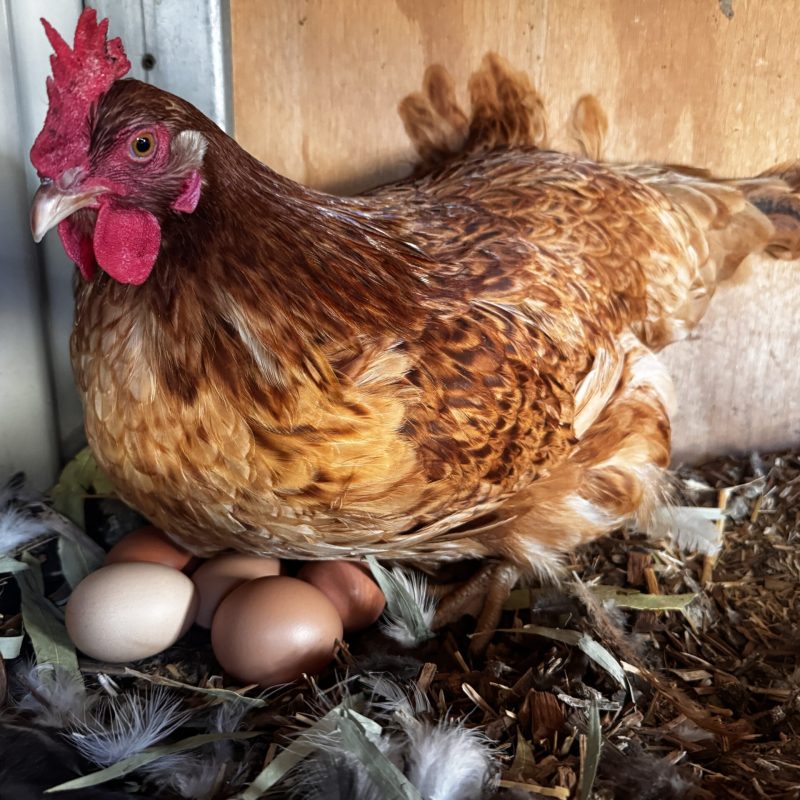
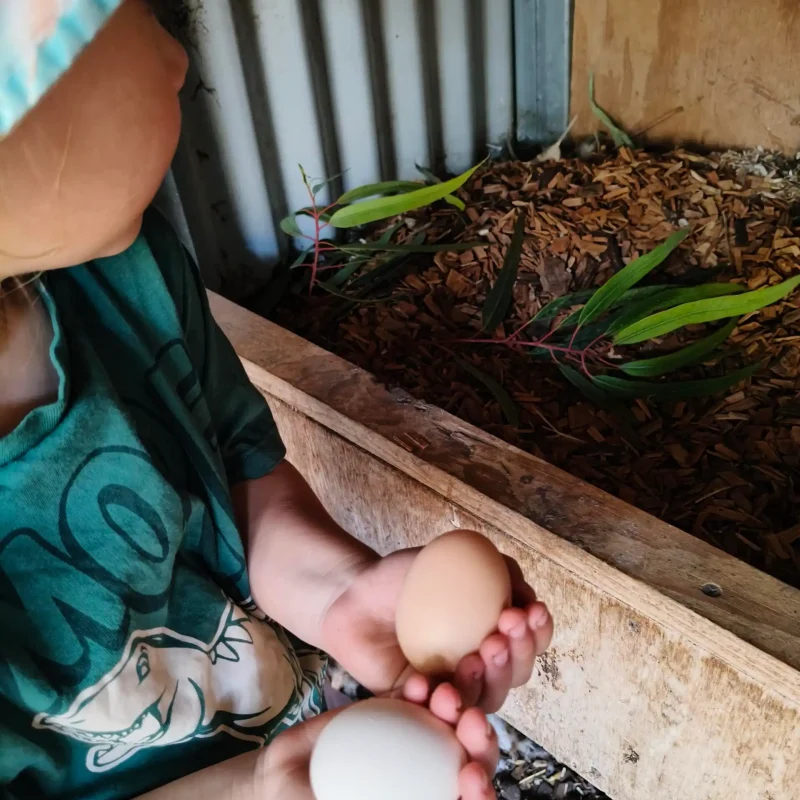
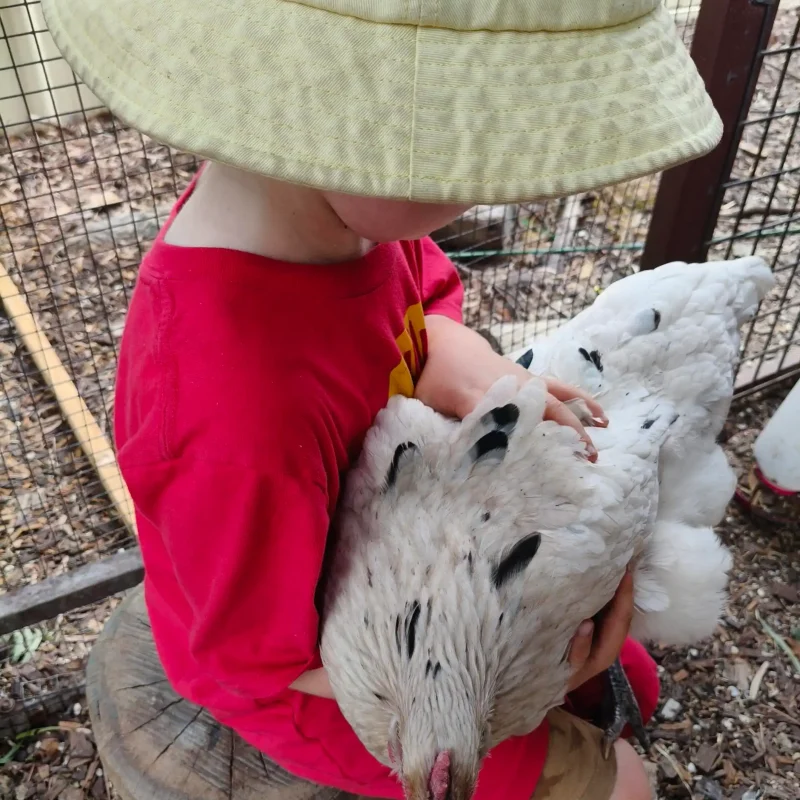
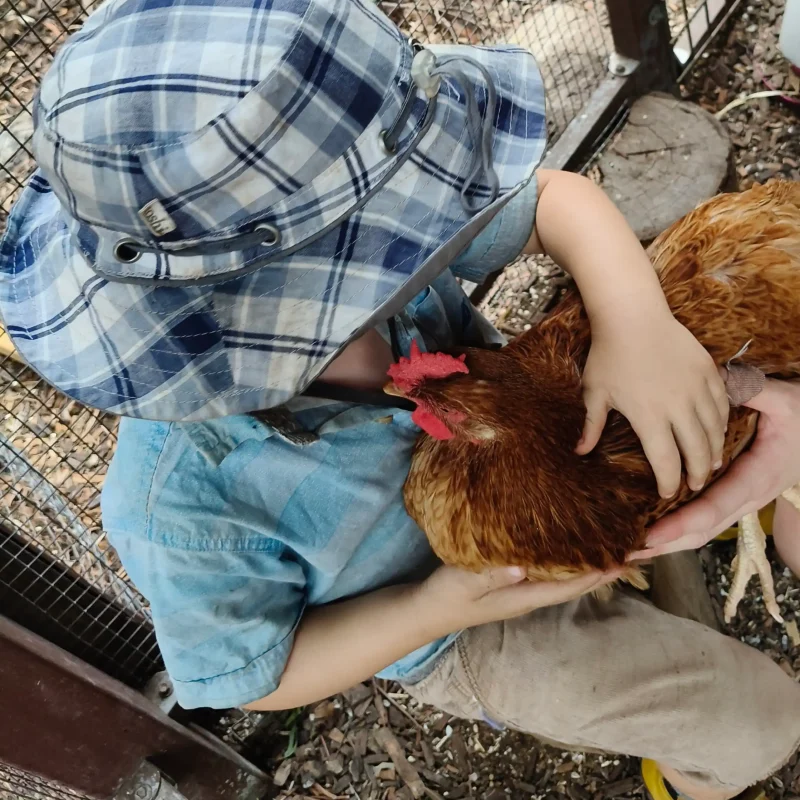
Our flock of free-range chickens are a central part of daily life at Little Learners. Children feed them, collect fresh eggs from the nesting boxes, and observe the full rhythm of the flock — from a hen quietly brooding on a clutch of eggs to the morning bustle of feeding time. Our chickens aren’t behind glass. They’re woven into the fabric of the day.
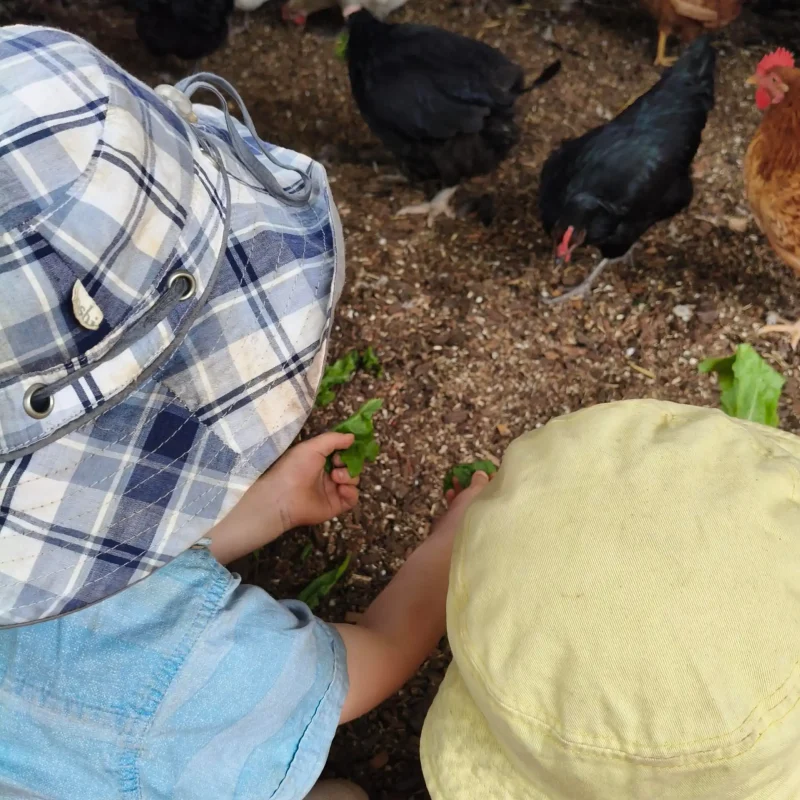
Children across all rooms engage with the flock in age-appropriate ways: toddlers scatter feed and watch; Nature Kindergarten children take on the full routine of care, including cleaning, egg collection and monitoring the nesting boxes. Every child develops a genuine relationship with an animal that depends on them.
“Children in our Nature Kindergarten designed and built a wooden ladder for the chicken coop themselves — and the chickens use it every single day.”
That ladder is perhaps the most vivid example of what makes our program extraordinary: a real problem, identified by children, solved with real tools, producing a functional outcome used by living animals. That is project-based learning at its most meaningful — and it is something no competitor in Perth can claim.
Real tools: Hand drills, hammers, clamps and vices
Child-led: Problem identified and solved by the children
A daily reminder of what children can do
Egg collection
Daily feeding routines
Free range flock
Child-built infrastructure
Animal care and responsibility
Sustainability in action
Our worm farms — closing the loop
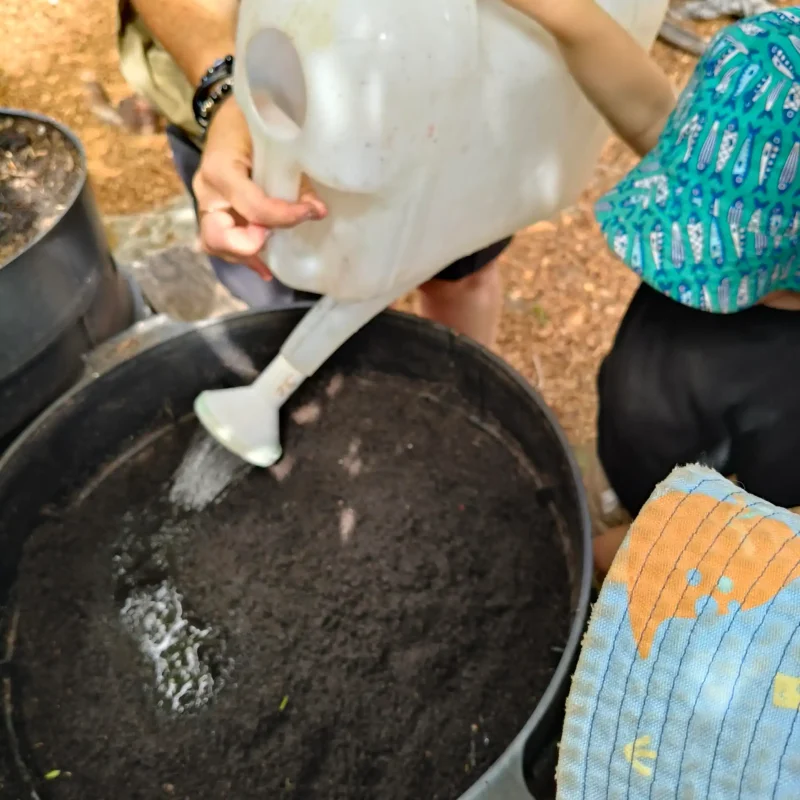
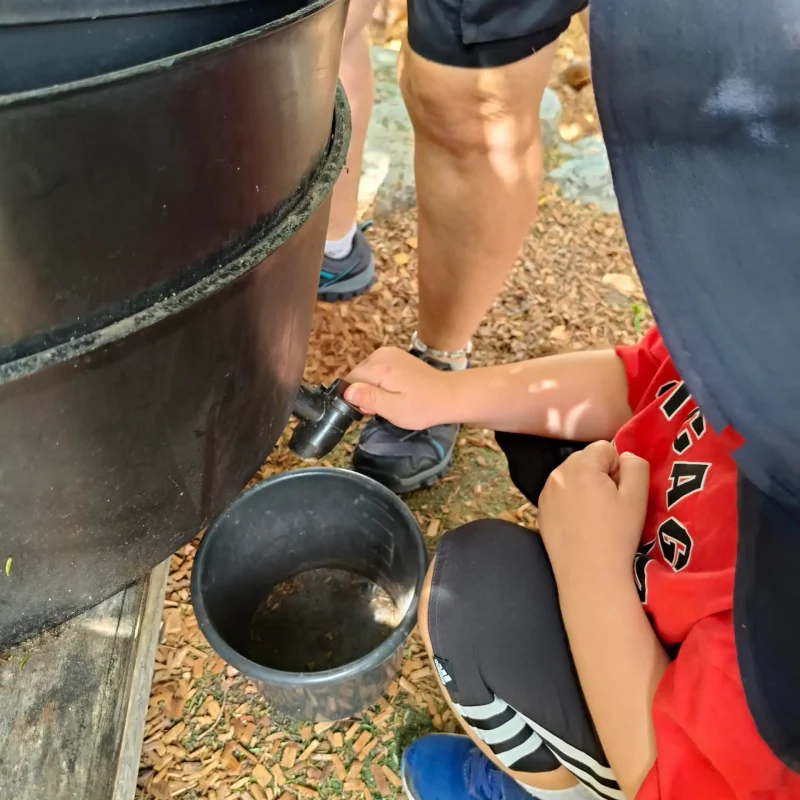
Worm farms are one of the most powerful sustainability teaching tools available in early childhood — they make the invisible visible. Children at Little Learners actively maintain our worm farms as part of their daily routine: adding moisture to keep the bedding healthy, monitoring the worms, and harvesting liquid fertiliser from the tap.
That liquid fertiliser is then applied directly to our vegetable and herb gardens — closing a complete sustainability loop that children can observe, touch and understand in real time. Food scraps become worm food. Worms produce fertiliser. Fertiliser grows vegetables. Vegetables become meals at the centre.
🌿Garden beds – fertilised with worm juice
Worm farm care at Little Learners isn’t a rotation activity or a term project. It’s an ongoing responsibility — children check moisture levels, discuss what the worms need and make decisions accordingly. This kind of sustained, purposeful engagement with a living system is exactly what builds genuine environmental identity, not just environmental awareness.
Gardens — from seed to plate
Our vegetable and herb gardens are tended by children across every room at Little Learners. Toddlers water raised garden beds and plant seedlings. Nature Kindergarten children harvest produce, contribute food scraps to compost and apply worm farm liquid fertiliser directly to the soil. And when produce is ready, it travels from the garden directly to meals prepared at the centre.
This garden-to-plate experience is not incidental. It is an intentional curriculum thread that builds understanding of where food comes from, how the natural world provides for us, and what it means to care for a living thing across its full lifecycle. Children who have grown their own food eat differently, think differently and relate to the natural world differently.
Watering and early care
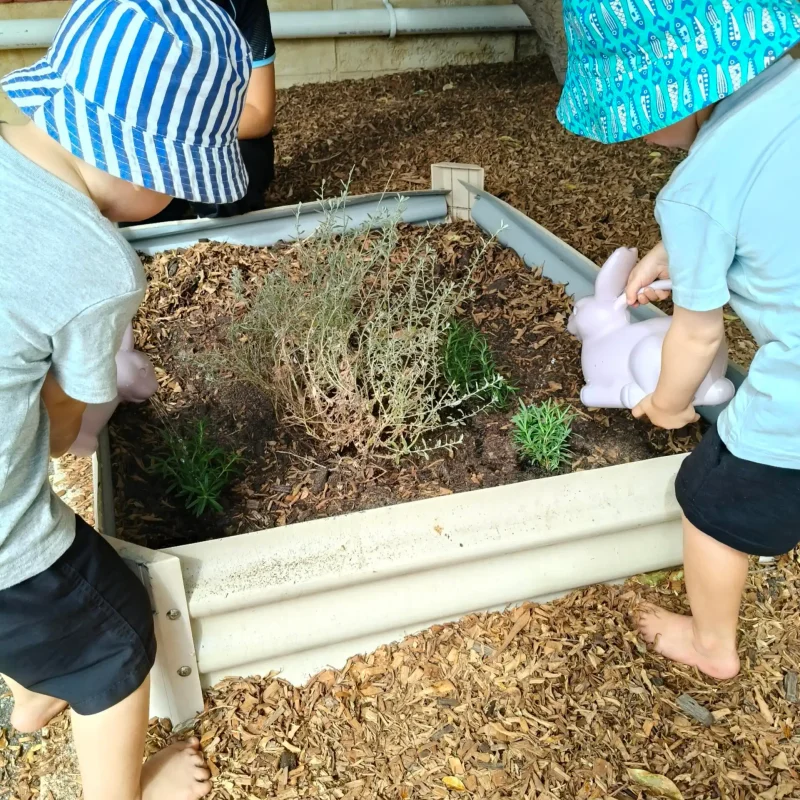
Toddlers water raised garden beds and plant seedlings using small watering cans, developing care, patience and early scientific understanding of how plants grow.
Harvest, compost and close the loop
Older children harvest produce, manage compost and apply worm farm liquid — completing the full sustainability cycle from food scrap to fertiliser to vegetable to meal.
Noongar bush tucker
We introduce children to local Noongar plant knowledge and the importance of caring for country — building cultural understanding alongside environmental awareness.
Garden to plate meals
Fresh produce harvested by children is incorporated into nutritious meals at the centre — making the connection between growing food and eating it completely tangible.
Why this matters — and why it starts here
Research consistently shows that children who develop a genuine connection to nature in their early years are more likely to grow into environmentally responsible adults. But the outcomes reach further than environmental attitudes. Children who care for animals develop empathy and responsibility. Children who maintain worm farms develop scientific thinking and an understanding of systems. Children who meet wild animals develop confidence and curiosity.
At Little Learners, we go beyond environmental awareness to build environmental identity. Children don’t just know about sustainability — they practise it, take responsibility for it and feel genuine pride in it. The chickens need feeding. The worm farm needs watering. The garden needs tending. These are real responsibilities, not simulations.
And crucially, this living outdoor environment supports the whole child — not just their understanding of nature, but their sense of agency, their capacity for empathy, their scientific thinking, and their understanding of themselves as someone who can make a difference. That is early education at its most powerful.
“We go beyond environmental awareness to build environmental identity. Children here don’t just know about sustainability — they practise it, take responsibility for it, and feel pride in it.”
Come and see our world for yourself
The best way to understand what makes Little Learners different is to walk through our outdoor spaces. Meet the chickens, the worm farm, the gardens — and the educators who bring it all to life every day.
Become Part of the Little Learners Family
When you join our community, you’re giving your child the opportunity to thrive in a setting where nature inspires every lesson and every adventure. You’ll become a valued member of our warm, inclusive family - where children, parents and Educators work together to create lasting memories and a brighter future for all.