
Why Our Early Learning Centre Near Beaconsfield Puts Children to Sleep Outside — and What the Research Says It Does for Them
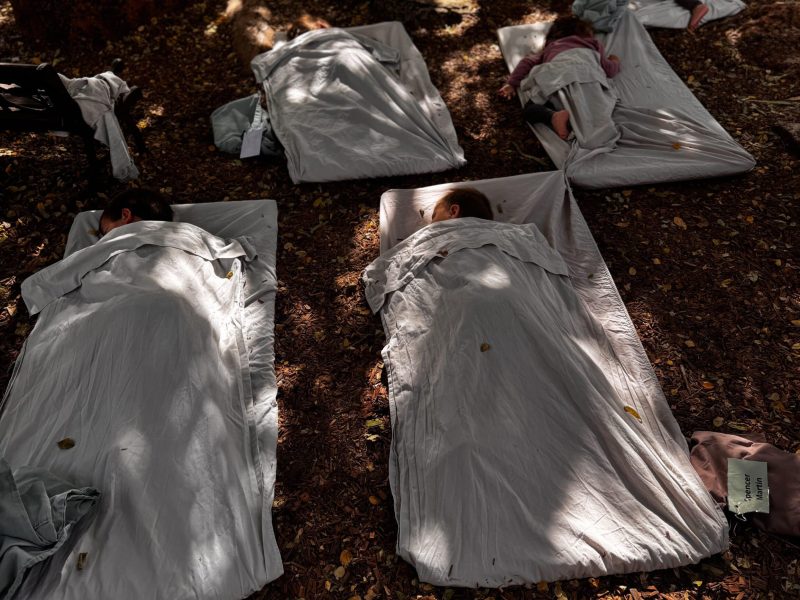
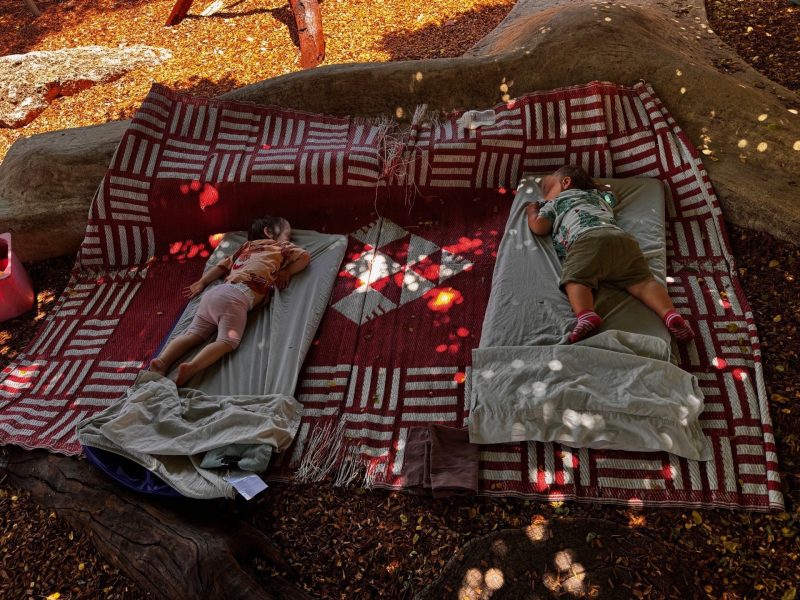
Most Beaconsfield families, on their first tour of our early learning centre, notice the outdoor environment first. The creek bed, the native trees, the open sky. What some notice next — and occasionally ask about with a raised eyebrow — is that during rest time, the children are outside. In the shade of the tree canopy. In the open air. Sleeping, or resting quietly, in nature. This is not an oversight. It is one of the most research-supported things we do.

A Tradition Backed by Decades of Nordic Research
In Finland, Sweden, Norway and Denmark, putting children to sleep outside is not a novelty. It is a century-old public health practice, promoted by Nordic maternity clinics from the early 1900s, embedded in childcare culture as thoroughly as any other daily routine. Walk through Helsinki, Oslo or Copenhagen and you will see prams parked outside cafes, apartment buildings and childcare centres — babies sleeping contentedly in the open air while life continues around them.
The research behind this practice has accumulated steadily. A Finnish study published in the International Journal of Circumpolar Health examined outdoor sleeping among children under 2 years in northern Finland, where outdoor temperatures during the study ranged from -27 to +5 degrees Celsius. Its finding was consistent with what Nordic parents have always known: children took longer naps outdoors than indoors. Parents reported the practice as overwhelmingly positive, the children healthier, and the daytime rest more restorative.
The mechanism is not mysterious. Natural outdoor environments provide lower ambient temperatures than heated indoor rooms, natural light patterns that support circadian rhythm regulation, and the gentle sensory backdrop — birdsong, breeze, the sound of leaves — that research on sleep environments consistently identifies as more conducive to deep rest than the artificial acoustic and thermal environment of an indoor room.
🌿 The Nordic Outdoor Rest Tradition — Why It WorksNordic countries have practiced outdoor napping for children since the early 20th century, when public health authorities promoted it specifically to reduce indoor germ transmission and improve immune function. The science behind it has since been confirmed across multiple independent studies. Children who sleep outdoors in natural environments consistently sleep longer, wake calmer, have better afternoon engagement, and show lower rates of the respiratory infections that circulate through indoor childcare environments. The tradition reflects a broader Nordic conviction — one that also underpins the Scandinavian forest school philosophy at the heart of our Nature Kindergarten — that children belong outdoors, and that the natural environment supports every dimension of their health and development.
Read the Finnish outdoor sleeping study (International Journal of Circumpolar Health) →
The Finnish Research That Quantifies the Difference
The most relevant and rigorous study for Beaconsfield families is the DAGIS study — a large cross-sectional Finnish study that examined health and wellbeing in preschools across 66 early childhood education and care centres and 864 children aged 3 to 6 years. Published in PMC/NIH, it specifically investigated the relationship between outdoor exposure in ECEC settings and children’s sleep duration and quality.
For Beaconsfield families, this finding is directly applicable. The question it raises is simple: what kind of environment does your child rest in during the day? If the answer is an indoor room with artificial light, climate-controlled air and the background noise of a building — that is a different sleep environment than a shaded outdoor space under native tree canopy, with natural temperature, natural light and natural sound. The research says the second environment produces better sleep. Our early learning centre near Beaconsfield has been providing the second environment since 2014.
What Outdoor Rest Produces That Indoor Rest Cannot
The benefits of outdoor rest in a natural environment are not limited to sleep duration. They extend across multiple dimensions of a child’s daily wellbeing — and for Beaconsfield families who are thinking carefully about what their child experiences across the eight to ten hours of a childcare day, each of these dimensions matters.
😴 Longer, Deeper Sleep
The Finnish research is consistent: children napping outdoors sleep longer than those resting indoors. The slightly cooler temperature, the natural light cycle, and the absence of the artificial stimulation of indoor environments combine to produce more restorative sleep. A child who sleeps 20 minutes longer at rest time is a different child in the afternoon — calmer, more capable of sustained play, less prone to the emotional dysregulation that comes with genuine tiredness.
🦠 Stronger Immune Function
One of the original reasons Nordic health authorities promoted outdoor sleeping was specifically to reduce children’s exposure to the indoor germ environment. Childcare centres are warm, enclosed spaces where respiratory viruses circulate efficiently. Outdoor rest interrupts that cycle — children breathing fresh air in an outdoor environment are not breathing the recirculated indoor air that transmits infection most effectively. Nordic physicians noted measurably fewer respiratory infections in children who rested outdoors regularly.
🌡️ Cortisol Recovery
Research on nature exposure and cortisol levels in children consistently finds that time in natural environments reduces the body’s primary stress hormone. A child who has had an active morning — investigating, climbing, socialising, managing the inevitable small frustrations of shared play — arrives at rest time with elevated cortisol. Resting in a natural outdoor environment, under tree canopy, with natural sound and temperature, produces a genuine physiological recovery. Resting in a climate-controlled indoor room does not produce the same effect.
🌞 Circadian Rhythm Support
Natural light — even filtered through tree canopy — provides the circadian signal that artificial indoor lighting cannot replicate. Children’s sleep-wake cycles are regulated by light exposure, and outdoor rest provides the natural light input that supports healthy circadian rhythm development. For Beaconsfield families who find their children’s sleep schedules difficult to regulate, the outdoor rest that our early learning centre provides is contributing to — not disrupting — the circadian rhythm that makes bedtime easier at home.
🧠 Cognitive Restoration
Attention Restoration Theory — well-established in the environmental psychology literature — holds that natural environments provide a specific kind of attentional recovery that built environments cannot. The effortless fascination of natural surroundings (the movement of leaves, the sound of birds, the feeling of a breeze) allows the directed attention systems that children use for active learning and social engagement to genuinely rest and restore. Children who rest outdoors wake from rest with better cognitive readiness than those who rest indoors.
🐦 Sensory Continuity With the Environment
A child who rests outdoors — who hears the same birds they investigated at morning circle, who feels the same breeze that moved through the creek bed play, who wakes to the same native trees they climbed before lunch — has a continuous sensory relationship with the natural environment that builds the nature identity the research identifies as a long-term developmental benefit. Outdoor rest is not just a sleep practice. It is part of the continuous experience of being in, and belonging to, a natural world.
What Outdoor Rest at Our Early Learning Centre Near Beaconsfield Actually Looks Like
Beaconsfield families sometimes imagine outdoor rest as children lying on mats in direct sunlight. It is nothing like that. Here is what actually happens at our early learning centre near Beaconsfield during rest time, for each age group.
Outdoor Rest — What It Looks Like at Little Learners
Baby Room (6 weeks to 2 years) – Indoors
Toddler Room (2 to 3 years) — Shaded Outdoor Environment
Nature Kindergarten (3 to 6 years) -Quiet Outdoor Time.
Weather Adaptation
Why This Matters Particularly for Beaconsfield Families
Beaconsfield is a suburb that already understands the value of the outdoors. The families who bring their children to Beacy Park on weekends, who walk along the South Fremantle foreshore, who know that their children are calmer and more settled after time outside — these families have direct, lived experience of what the research confirms about nature and children’s wellbeing.
The outdoor rest at our early learning centre near Beaconsfield is an extension of that understanding into the centre’s daily rhythm. It is not something we do despite conventional childcare practice. It is something we do because it reflects everything the research says about what children need — and because, having done it since 2014, we have seen its effects in the children who rest outdoors and wake for their afternoon session calmer, more ready, and carrying less of the afternoon tiredness that disrupts the end of a childcare day.
For Beaconsfield families thinking about what the daily experience of their child’s early learning centre actually does for their child across all eight to ten hours of the day — not just the programme hours but the rest hours — the outdoor rest practice at our early learning centre is one of the clearest examples of a decision made on the basis of what is best for children rather than what is most convenient for management.
You can read more about what the full day at our early learning centre near Beaconsfield produces in our post on the long-term outcomes of quality early learning for Beaconsfield children, and about our outdoor programme more broadly in our outdoor play guide for Beaconsfield families.
- Beaconsfield
- White Gum Valley
- South Fremantle
- Hilton
- Hamilton Hill
- O’Connor
- Beaconsfield Primary
- Beacy Park
Frequently Asked Questions — Outdoor Rest at Our Early Learning Centre Near Beaconsfield
Do children sleep outdoors at Little Learners near Beaconsfield?
Yes. Toddlers and Nature Kindergarten children rest outdoors at our early learning centre near Beaconsfield, in the shade of our native tree canopy. Babies in the Baby Room rest indoors with their primary educator. Outdoor rest has been part of our programme since 2014 and is directly supported by Nordic and Finnish research on sleep quality in natural environments. In extreme heat we adapt — but across most of Perth’s year, and particularly in the mild winter months when outdoor rest produces the deepest sleep, the outdoor rest environment is consistently available.
Is it safe for children to sleep outdoors in Perth’s climate?
Yes — Perth’s climate is well-suited to outdoor rest for most of the year. Our outdoor rest area is fully shaded by our 30+ native trees, providing natural protection from direct sun. In winter, the mild Perth temperatures in a shaded outdoor environment are ideal — cooler than an indoor room, but well within the comfortable range for resting children who are appropriately dressed. We monitor conditions and adapt rest arrangements in extreme weather. The outdoor rest area is never exposed to direct heat, and educators are present throughout all rest periods.
Why does outdoor rest produce better sleep quality in children?
Research identifies several mechanisms. Natural outdoor environments provide lower ambient temperatures than heated indoor rooms, which research consistently associates with deeper sleep. They provide natural light that supports circadian rhythm regulation. They expose children to the mild sensory backdrop of natural sound and breeze rather than the artificial acoustic environment of indoor spaces. And they reduce children’s exposure to the indoor germ environment that transmits respiratory infections in childcare settings. Finnish research found children took measurably longer naps outdoors than indoors. The DAGIS study of 864 Finnish preschoolers found natural ECEC outdoor environments associated with longer night-time sleep duration.
How close is Little Learners to Beaconsfield?
Approximately 3 minutes from Beaconsfield via York Street. Our address is Little Learners, 242 South St, White Gum Valley WA 6162. Call us on (08) 9335 6941 Monday to Friday between 6:30am and 5:30pm. Our all-inclusive daily fee of $140 covers all meals, enrichment programme, incursions and Kinderloop. We are fully CCS approved.
What is the connection between outdoor rest and the Scandinavian forest school approach at Little Learners?
Our Nature Kindergarten programme is inspired by Scandinavian forest school principles — the same Nordic tradition that also informs the outdoor sleeping practice that has been standard in Finnish and Scandinavian childcare for over a century. Both practices share the same foundational conviction: that children belong outdoors, that the natural environment supports every dimension of their health and development, and that the best thing an early learning centre can do for a child is provide the richest possible daily experience of the natural world. Outdoor rest is not a separate feature of our programme. It is an expression of the same values that shape everything else we do.
Come and See Rest Time in Action
The outdoor rest environment at our early learning centre near Beaconsfield is one of the things families most often comment on when they visit. Book a tour and see the native tree canopy, the shaded rest areas, and the outdoor spaces that children inhabit across the full day — including while they sleep. We’re 3 minutes from Beaconsfield via York Street.